 Selerity
Orthopaedic Chair Cushion: Who Needs It and How It Works
By Олег МельничукPublished: 3 min read
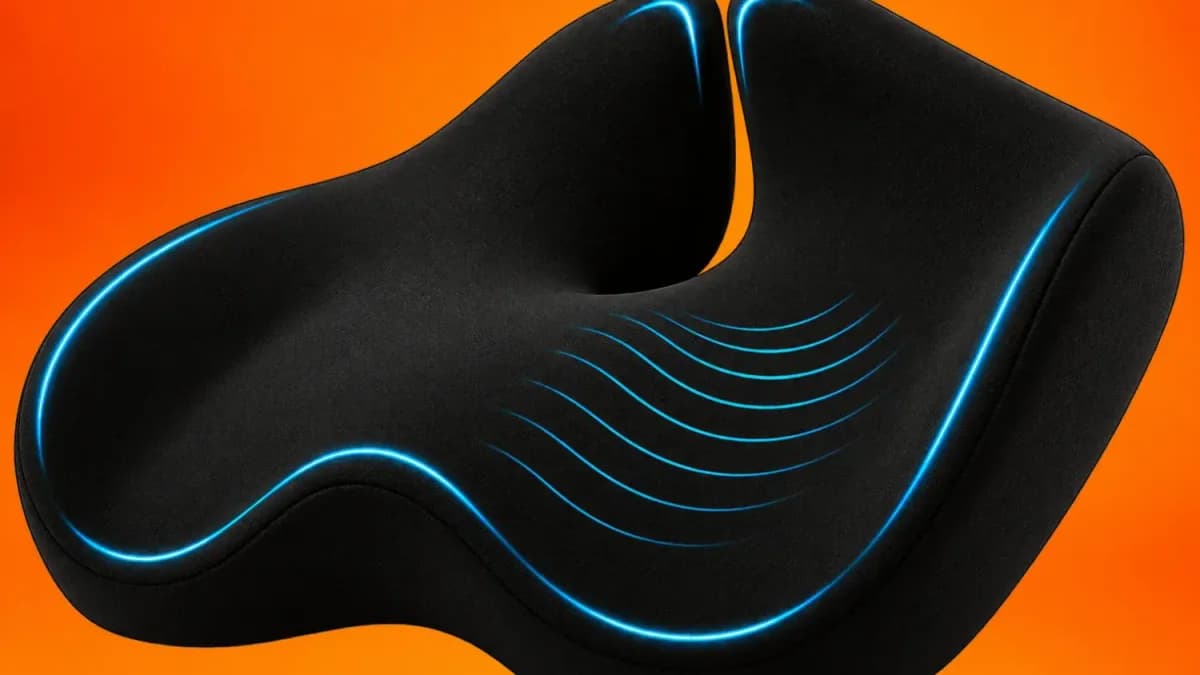
In short: an orthopaedic chair cushion is a contoured cushion (usually foam) that redistributes pressure on the buttocks and thighs and can reduce pressure on the tailbone. It can add comfort in long sitting, but it does not treat any condition and does not replace good posture, breaks and chair adjustment.
How it works
An ordinary hard seat presses on small areas: the sit bones and tailbone. A contoured cushion:
- spreads weight over a larger area;
- may have a tailbone cut-out (U-shaped) that reduces pressure on that area;
- supports pelvic tilt and adapts to the body shape;
- cushions vibration and the hardness of the seat.
Evidence of benefit from cushions for people with healthy backs is limited; this is a comfort aid. The NHS, in its self-care list for tailbone pain, advises using a specially designed coccyx cushion. NHS: tailbone pain. More: tailbone pain from sitting work.
Who it may help
- People who sit for many hours at a computer or at the wheel.
- Those with a hard chair or one with a sagging seat.
- Those who feel pressure or discomfort at the tailbone (on a doctor's advice if the pain is persistent).
- Those who need more seat height (adjusting for monitor and desk position).
Who it may not suit
- Those who already have a comfortable chair with a proper seat.
- Tall people, for whom the extra height raises the knees above the pelvis or lifts the feet off the floor.
- Those whose pain comes with numbness, weakness or other worrying signs: a doctor is needed.
What it does not do
- It does not treat back or tailbone pain.
- It does not replace breaks and movement, see how long to play without a break.
- It does not fix posture by itself: see typical posture mistakes.
Types of cushion
| Type | Features |
|---|---|
| Flat (basic) | even pressure distribution |
| With tailbone cut-out (U-shaped) | reduces pressure on the tailbone |
| Wedge | changes pelvic tilt |
| Lumbar | supports the lower back curve, see tailbone or lumbar cushion |
How to choose
- Size. It should match the chair seat and not overhang.
- Material and density. On memory foam: memory foam.
- Thickness. Such that the feet stay on the floor and the knees at about 90°: how to sit on the cushion.
- Cover. Removable and washable.
- Non-slip base. The cushion should not shift.
What to check before buying
- Return terms (comfort is individual).
- Reviews on foam durability.
- Whether it fits your chair.
When to see a doctor
Tailbone, back or leg pain that does not go away after several weeks, or comes with numbness, a high temperature or weakness, needs a doctor.
FAQ
Will a cushion help back pain?
Can I use it all the time?
Do I need one at the office and at home?
How long does it last?
Sources
- NHS: tailbone pain (coccydynia).
- Mayo Clinic, Ministry of Health of Ukraine: seating ergonomics.
- This material is informational and does not replace a doctor's advice.
Shop picks
This is a selection of shop products on the topic of the article. The article is written independently.
Read also
Memory Foam: Pros, Cons and Care
Read →Tailbone Pain From Sitting Work: Causes and What Helps
Read →Tailbone Cushion or Lumbar Cushion: What Is the Difference?
Read →