Selerity
Forearm Pain From the Mouse: Causes and How to Reduce the Load
By Олег МельничукPublished: 2 min read
In short: forearm pain from the mouse is most often linked to overloaded muscles and tendons: long static tension, poor posture, too firm a grip, a mouse that is too small or large, and no breaks. A neutral wrist, a relaxed grip, correct desk height and regular breaks help reduce the load. Pain with numbness, weakness or swelling is a reason to see a doctor.
Why does the forearm hurt?
The mouse is held by static tension in the forearm muscles: they work together on every movement and click. Under prolonged load without rest, fatigue builds up in the tissue, causing pain and stiffness. The most common factors:
- Long static posture without breaks.
- Wrist bent up or sideways (poor position).
- Firm grip and pressing the buttons too hard.
- The wrong mouse: too small or too large, see mouse grip.
- Elbow unsupported or the desk too high or low.
- Lots of monotonous movements and clicks.
- Cold and tension in the shoulders and neck, which radiate into the arm.
How to reduce the load
- Neutral wrist. The hand should lie almost straight, without a sharp bend up or sideways.
- Elbow at about 90° and supported, desk and chair height adjusted, see monitor height and seating.
- Relaxed grip. Do not squeeze the mouse; clicks should not need effort.
- Right mouse size. Choose a mouse to fit your hand length and width.
- Move from the forearm and shoulder, not only the wrist (especially at low sensitivity), see mouse pad for low sensitivity.
- Breaks. Every 30–60 minutes a short pause and warm-up, see hand and wrist warm-up, how long to play without a break.
- Change position. Move, shake out your hands, change posture.
- General physical activity, stretching the shoulders and neck.
What about sleeves?
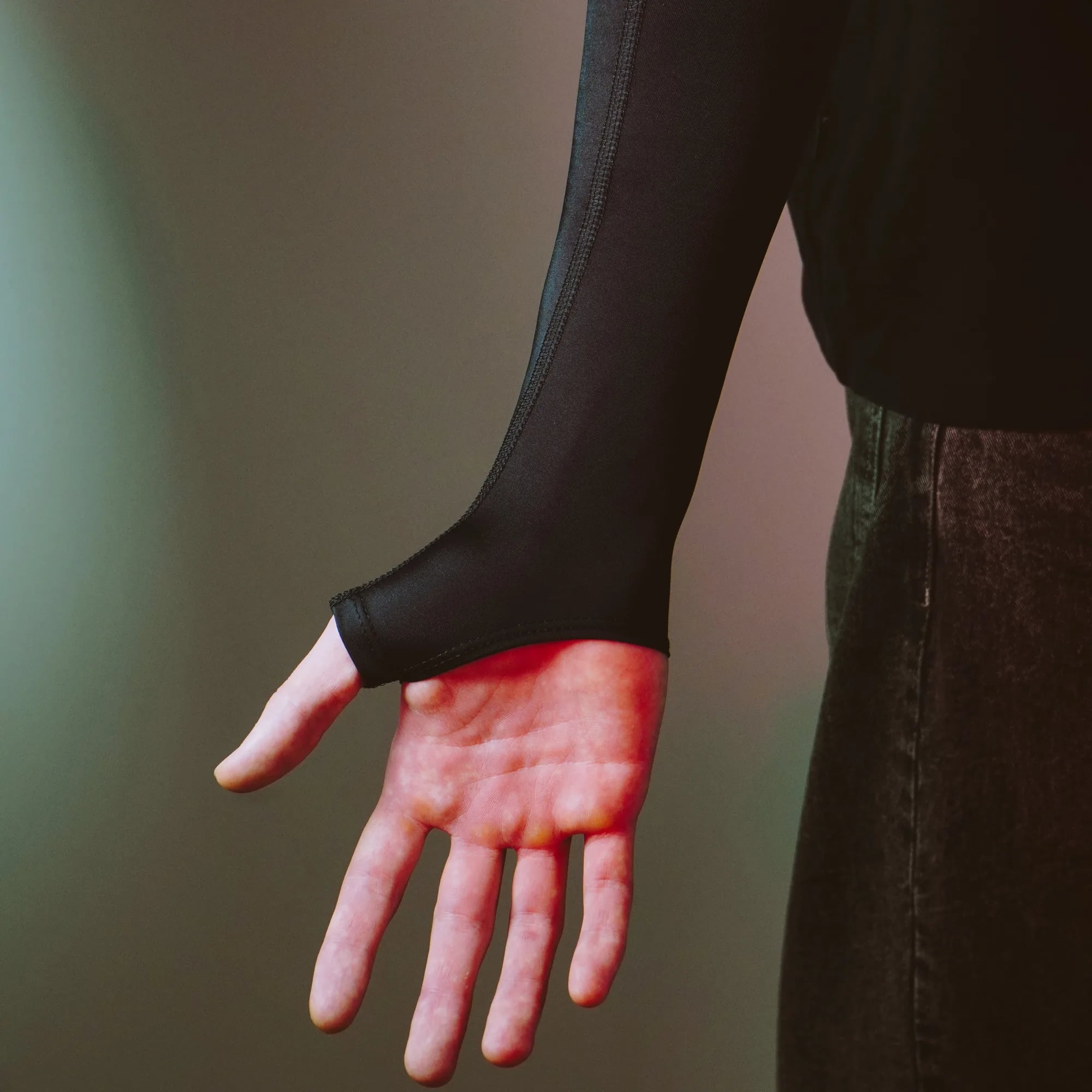
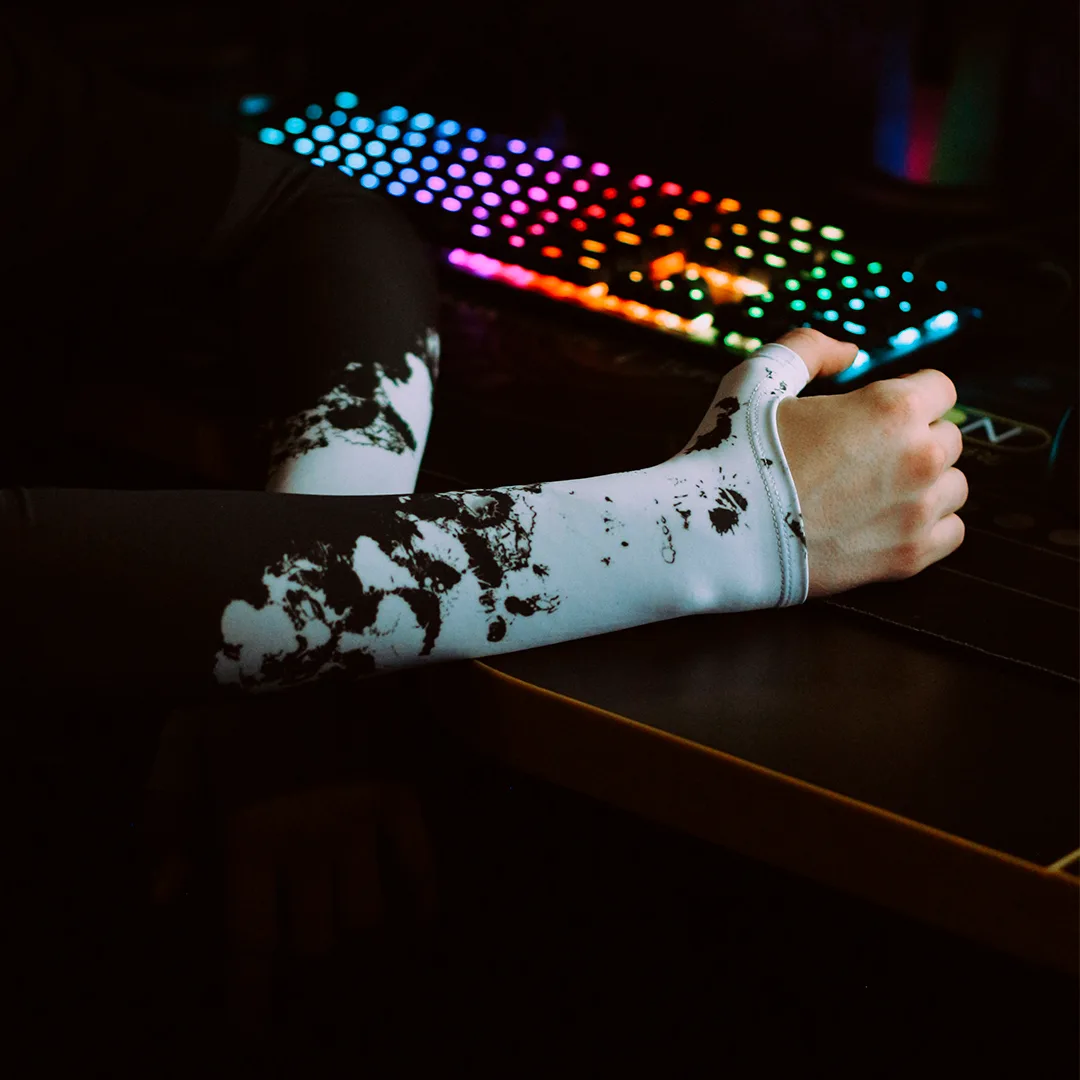
A compression sleeve can give a feeling of comfort and protects the skin, but there is no evidence it treats pain or prevents overload, see do sleeves help arm fatigue. It does not replace posture and breaks.
Red flags: when to see a doctor
See a doctor if:
- pain lasts more than a few weeks despite changing habits;
- there is numbness or tingling, especially in the fingers, or weakness in the hand;
- pain gets worse at night and wakes you;
- swelling, redness or a palpable lump appears;
- there was a fall or injury;
- pain spreads to the neck or shoulder, or there is dizziness or weakness in the other arm.
Do not self-treat: a doctor makes the diagnosis. More on one common condition: carpal tunnel syndrome in gamers.
FAQ
Can the mouse make the forearm hurt?
Will a different mouse help?
Do I need a wrist rest?
How much should I rest?
Sources
- NHS and nidirect: general advice on preventing wrist and forearm overload, nidirect: carpal tunnel syndrome.
- Mayo Clinic, Ministry of Health of Ukraine: workstation ergonomics.
- This material is informational and does not replace a doctor's advice.
Shop picks
This is a selection of shop products on the topic of the article. The article is written independently.