Selerity
Why Your Forearm Sticks to the Desk and How to Fix It
By Андрій КоваленкоPublished: 2 min read
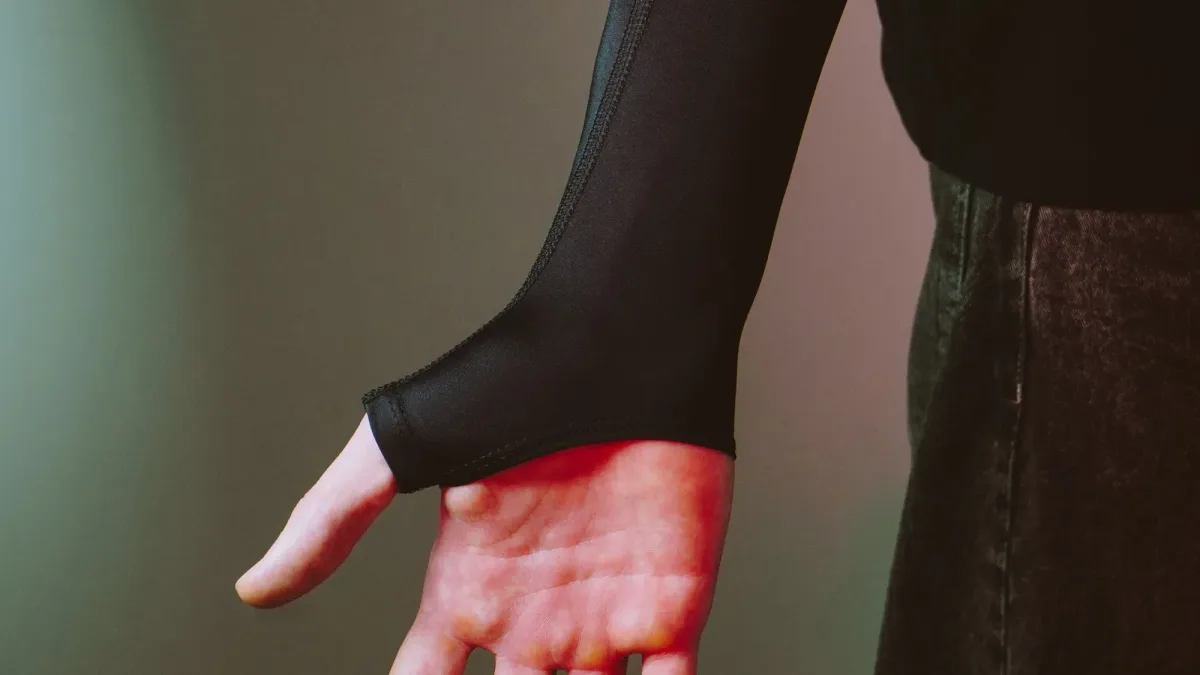
In short: the forearm "sticks" when sweat and skin moisture create close contact with a smooth desk surface (lacquer, plastic, glass). Three things help: change the surface under your arm (a pad), add a layer between skin and desk (a sleeve, thin clothing) and reduce sweating and overheating.
Why does skin stick?
It is contact physics. Dry skin glides, while damp skin on a smooth surface forms a thin film of water and oil that "suctions" the skin: the smoother and denser the surface, the stronger the sticking. Made worse by:
- Heat and sweating. In a hot room or intense play, sweat is produced more actively.
- Lacquered and plastic desks. Smooth, glossy, they do not absorb moisture.
- Glass and mirror finish. They stick the most.
- Leather and vinyl desk covers. They warm up and cling to skin.
- Long sessions. Skin is pressed against the surface for a long time and moisture accumulates.
For sweat itself, its causes and what is normal, read the separate article sweaty palms: when it is normal.
What helps: from simple to more involved
1. Change the surface under your arm
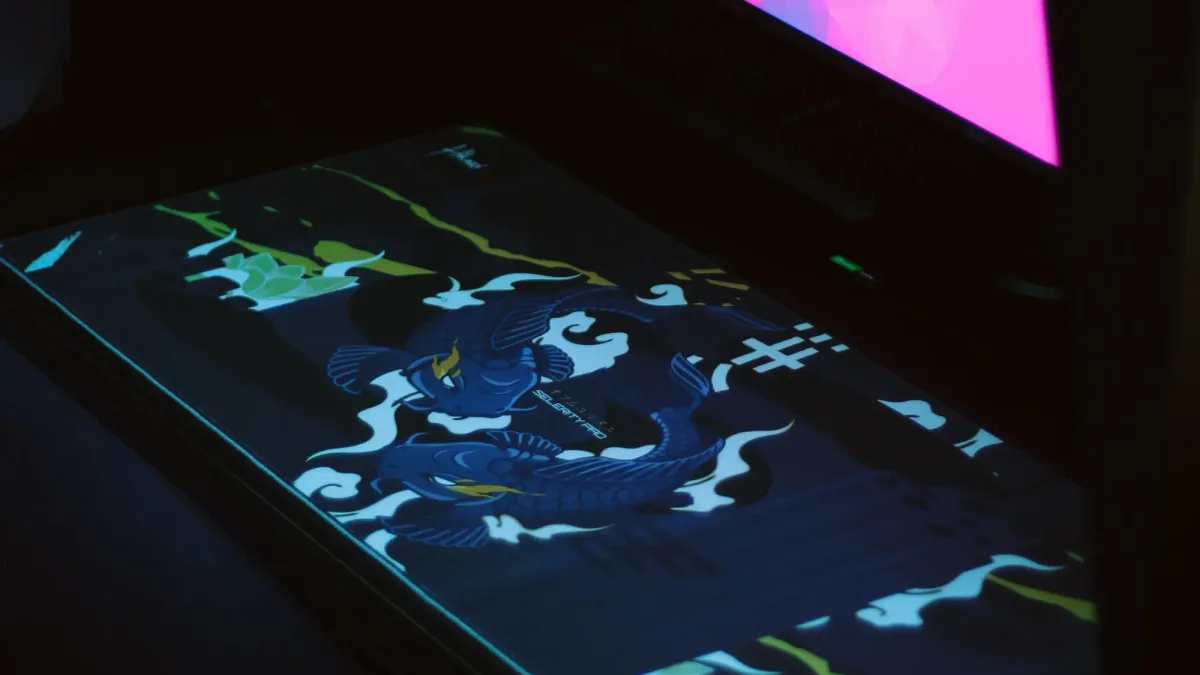
The simplest fix is a pad covering the arm zone. A cloth surface absorbs moisture and does not stick the way lacquer does. A larger pad covers the elbow too. See full desk mouse pad.
2. Add a layer between skin and desk
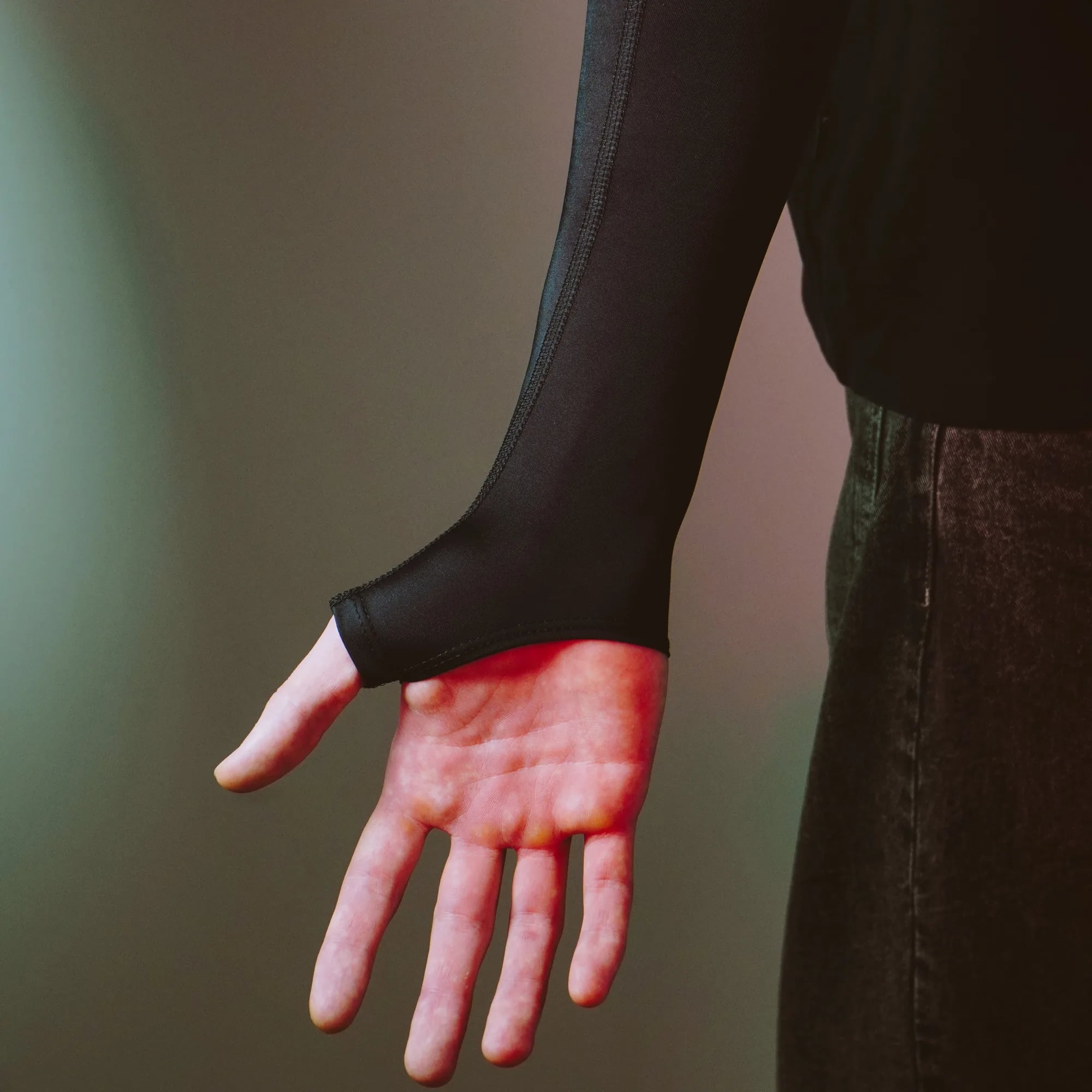
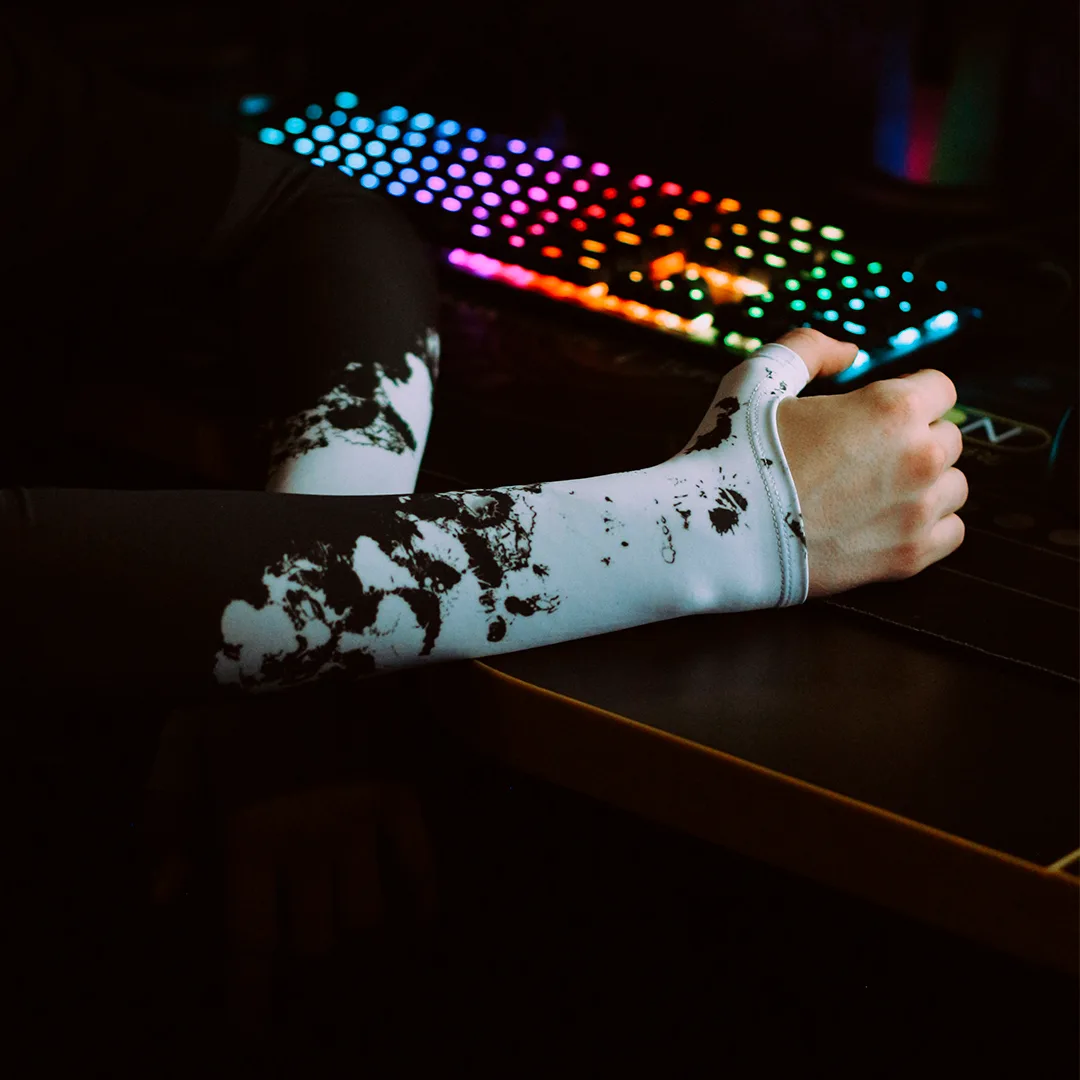
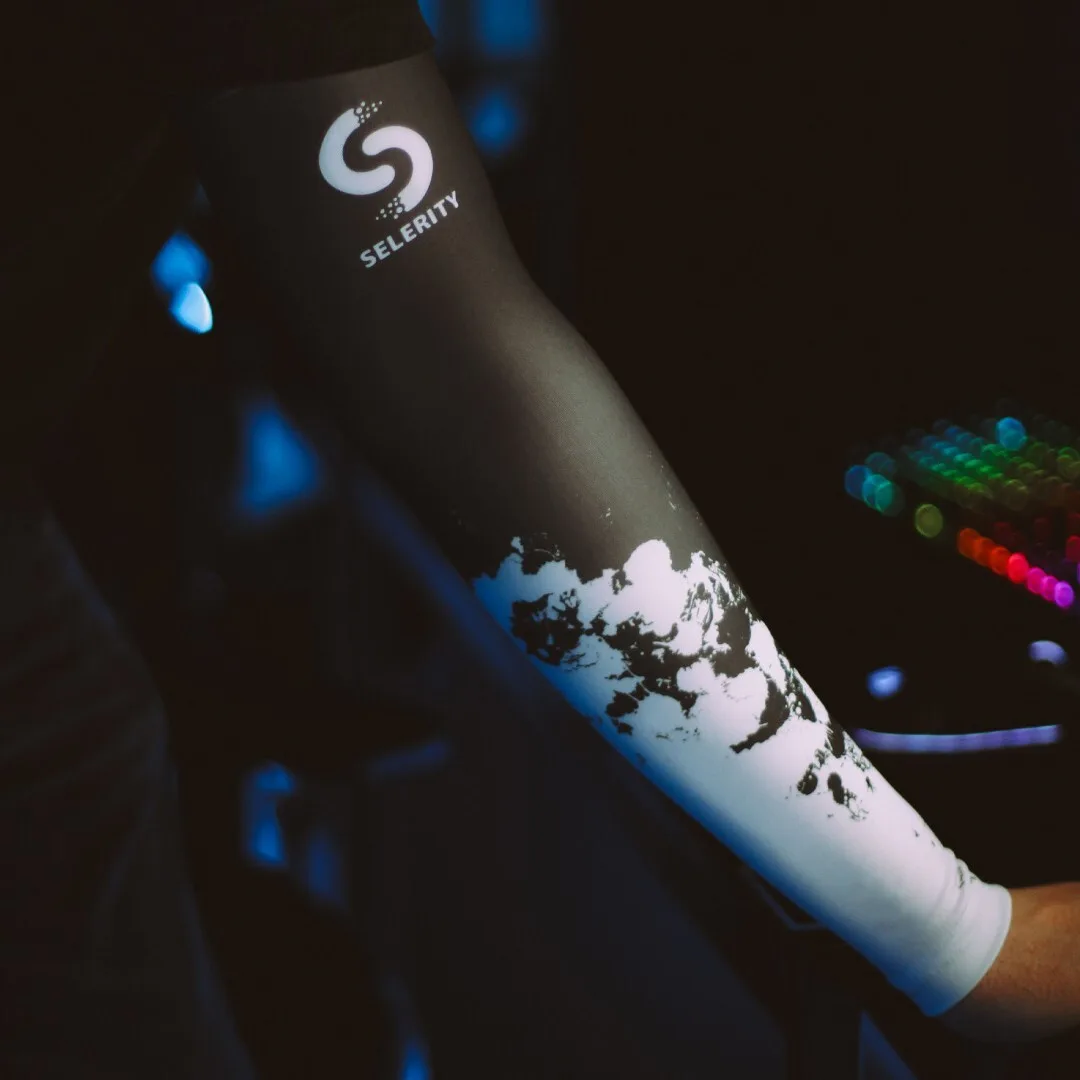
- A compression or sports sleeve. Thin stretch fabric wicks moisture from the skin and glides over the pad instead of sticking. For sleeve materials read the fabrics article.
- Thin clothing in natural or moisture-wicking fabric. A long sleeve reduces direct contact.
3. Reduce overheating
- Ventilate the room, use a fan, but do not aim the airflow at your eyes.
- Drink water and take breaks.
- Avoid tight synthetic clothing in the heat.
4. Skin care
- Wash hands and forearms before play and dry thoroughly.
- Do not apply greasy creams before a session: they increase slipperiness and dirt, and sticking too.
- There are antiperspirant products for palms, but that is a separate topic: hand antiperspirant cream.
What not to do
- Do not dust the desk with powder or talc: it dirties the pad and the mouse sensor.
- Do not cover the desk with sticky films without testing: they may leave a mark.
- Do not put up with pain or irritation: redness, rash or itching is a reason to see a doctor.
How to choose a fix
| Problem | What to try |
|---|---|
| Lacquer or glass, skin sticks | a pad as wide as the arm, or a sleeve |
| Heat, lots of sweat | moisture-wicking sleeve, ventilation, breaks |
| Arm "catches" on the pad | a sleeve with smooth fabric, check the pad |
| Skin irritation | change the material, see a doctor |
FAQ
Does a sleeve help with sweat?
Why does it stick only in summer?
Can I just glue a pad to the desk?
Is constant skin contact with the desk harmful?
Sources
- General information on sweating and skin care (sources at the editor's discretion: Ministry of Health of Ukraine, NHS).
- Fabric and clothing manufacturers' care guidance.
Shop picks
This is a selection of shop products on the topic of the article. The article is written independently.