Selerity
What Compression Sleeves Are Made Of: Fabric, Density, What to Look For
By Андрій КоваленкоPublished: 3 min read
In short: most compression sleeves are a blend of synthetic fibres (polyester or nylon) with elastane (spandex), which gives stretch and a snug fit. Quality is set by composition, fabric density and stretch, seams and the right size, not just price or colour.
What is the fabric made of?
Base. Polyester or nylon: strong, quick-drying and good at wicking moisture. Nylon is usually softer to the touch and more abrasion resistant; polyester holds colour and shape better.
Elastane (spandex, Lycra). A fibre that stretches several times its length and returns to shape. Its share sets the compression and the "memory" of the fabric. Typical blends contain roughly 10–25% elastane, the rest polyester or nylon. Exact percentages vary between makers, so read the composition on the label.
Extra treatments. Moisture-wicking finishes, antibacterial treatment, UV protection. These are marketing options: their effect depends on the maker and fades after many washes.
What to look for in the composition
| Factor | What it means |
|---|---|
| More elastane | tighter fit, stronger compression, but a warmer fabric |
| More nylon | softer, tougher against abrasion |
| More polyester | dries faster, holds colour better |
| Cotton in the blend | more comfortable to the touch, but dries slowly and holds shape worse |
Density and thickness
Fabric density affects three things: compression (denser means tighter squeeze), opacity (thin fabric shows through when stretched) and airflow (denser fabric is warmer). For gaming, medium density is usually chosen: enough to keep the sleeve in place and not too hot in a long session.
Seams
- Flat seams (flatlock) lie flat and do not chafe the skin.
- Seamless construction reduces friction but is harder to make.
- Coarse raised seams chafe, especially at the elbow bend, see why a sleeve chafes.
Size and compression
A sleeve should fit snugly without restricting circulation. For sizing read the separate article on choosing a sleeve size. Typical mistakes: too small a sleeve squeezes the biceps and causes discomfort, too big bunches up and slips.
How to tell a good sleeve
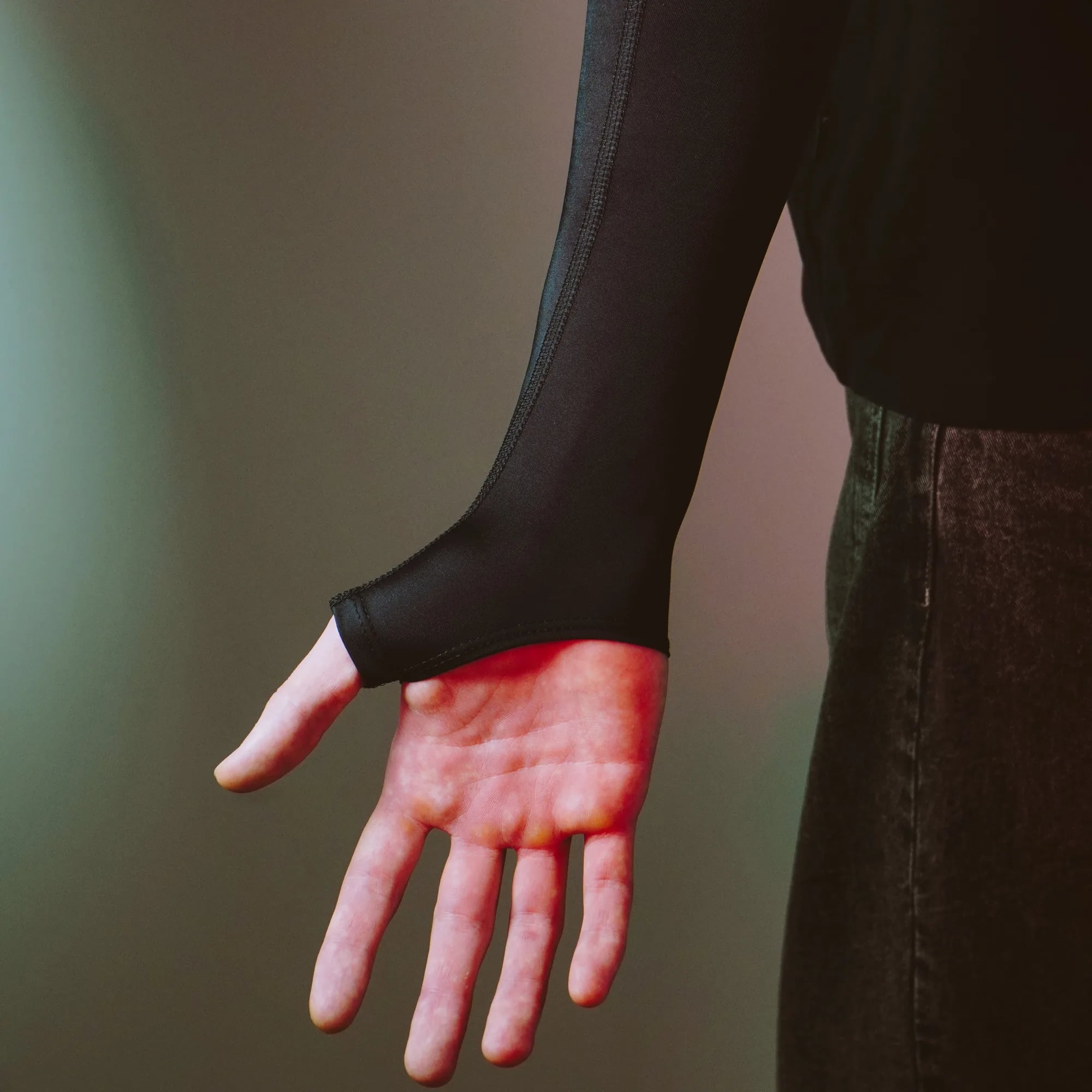
- Stretch the fabric and look against the light: if it shows through a lot, it is thin and will lose shape quickly.
- Let go: the fabric should snap back to its original shape, without sagging.
- Inspect the seams: even, with no loose threads.
- Check the composition on the label: makers with nothing to hide list it.
- Smell it: a sharp chemical smell that does not fade after washing is not a good sign.
- Read reviews about washing: whether it bleeds colour or loses shape.
Care
Usually the advice is to wash in cool water (30°C), without bleach or fabric softener (they clog the fibres), and dry naturally, away from a radiator. Always read the maker's label.
FAQ
Is it true compression "improves circulation"?
Which composition is best?
Does the fabric show through?
How much elastane is needed?
Sources
- Manufacturer labels and descriptions.
- Textile reference works (fibre composition and properties).
Shop picks
This is a selection of shop products on the topic of the article. The article is written independently.